 ⚙️
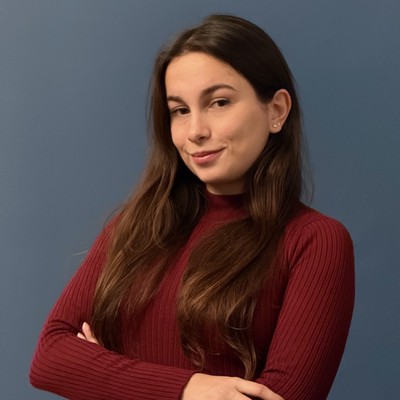
⚙️Simona Gurrì
(she/her)
Research Fellow · Reactive CFD for Internal Combustion Engines
Bio
Simona Gurrì is a Research Fellow at Politecnico di Torino working on reactive CFD of internal combustion engines fuelled by low-carbon alternatives (hydrogen, CNG, ethanol, methanol) for heavy-duty applications, with a line now extending toward ammonia. Her work combines combustion and turbulence modeling, chemical kinetics, and high-performance simulation, always validated against experimental engine data.
Her core expertise is in engine-scale combustion physics: in-cylinder turbulence-chemistry interactions, injection and mixture formation, and models that support the design and control of advanced internal combustion technologies. She employs CONVERGE CFD for 3D reactive simulations, GT-Power for 1D modeling, and Cantera for chemical kinetics and mechanism benchmarking, on CINECA HPC clusters.
Alongside engine CFD, a background in transportation and freight systems gives her a system-level perspective, connecting engine-scale choices to fleet and network performance — an uncommon dual grounding, directly relevant where engine and vehicle-system research converge. She is currently exploring postdoctoral and R&D opportunities in combustion, energy, and sustainable transport.
Education
PhD in Energetics
2021-11-01
2025-10-31
Politecnico di Torino
MSc Mechanical Engineering (Erasmus+)
2019-09-01
2020-06-30
EPF Sceaux, France
BSc & MSc Mechanical Engineering
2015-09-01
2021-07-31
Politecnico di Torino
Interests
Making high-fidelity engine combustion simulation both physically faithful and actually usable: accurate enough to trust, cheap enough to run inside a real design cycle.
Making CFD affordable
Methods that cut the cost of predictive engine CFD: a new boundary-condition optimization strategy (Applied Thermal Engineering) and a physics-based spark discharge model that captures cycle-to-cycle variability without prohibitive cost.
Combustion of low-carbon fuels
Chemical mechanism benchmarking, knock and misfire in hydrogen engines, and an emerging line extending toward ammonia combustion — grounded throughout in high-fidelity simulation and experimental validation.
Engine–system integration
From the B4IA hydrogen engine conversion to freight-rail and techno-economic analysis: connecting engine-scale choices to fleet and network performance, a perspective few combustion specialists bring.
- 4th Italian Cattedra Abertis Award (2026) — 5000 € for PhD research on sustainable mobility.
- First Place, Engineering & Industrial Design, 19th PACE Forum, Warren, Michigan, USA (2018) — international student team competition.
- Global Engagement Chair, ASME DRIVN 2026 conference (Transportation Systems Division) — leading international outreach and institutional partnerships.
- Vice Chair, ASME Italy Section.
- Peer reviewer for Energies (MDPI) and for the IEEE ITS, AIIT TIS and SAE Torino conferences.
- Mentee, Young ISSNAF Mentoring Program, connecting Italian researchers with senior scientists in North America.
A selection. See the full publication list.

My research keeps moving deeper into combustion science — toward a more fundamental understanding of how turbulence, chemistry, and heat transfer govern the combustion of low-carbon and carbon-free fuels, including an emerging line on ammonia. My aim is to build models that are both physically sound and usable in real design workflows, and to derive reduced-order models from high-fidelity CFD and experimental data that can inform engine control and calibration.
I am equally drawn to combustion as a phenomenon in its own right, beyond any single application. I would value the chance to complement my simulation background with experimental combustion research, working closer to optical diagnostics and measurement, to ground my models in observed physics and strengthen the loop between simulation and experiment. I am also open to data-driven and machine-learning methods where they accelerate combustion modeling and design.
My work is naturally collaborative and sits at the intersection of engine development, transport operations, and energy-systems analysis. I have co-supervised master’s theses across energy, mechanical, civil, and aeronautical engineering, and I believe diversity of perspectives is fundamental to solving complex problems in engineering and sustainability.
When I’m not surrounded by computational models, you will usually find me outdoors — running, hiking, or on a court — or somewhere with a camera in hand. These things keep my perspective balanced and remind me that the technologies I model on a screen ultimately serve real people, communities, and environments.
If you’d like to talk about combustion, CFD, sustainable transport, or a possible collaboration, feel free to get in touch.